An editorial studioWriting and editing since 2014
We write, edit and shape what a business says about itself.
Reports, essays, brand copy, and the house standards that keep a team writing in one voice. Most of our work is for organisations whose credibility rests on how carefully they put things.
The practice
What we actually do all day
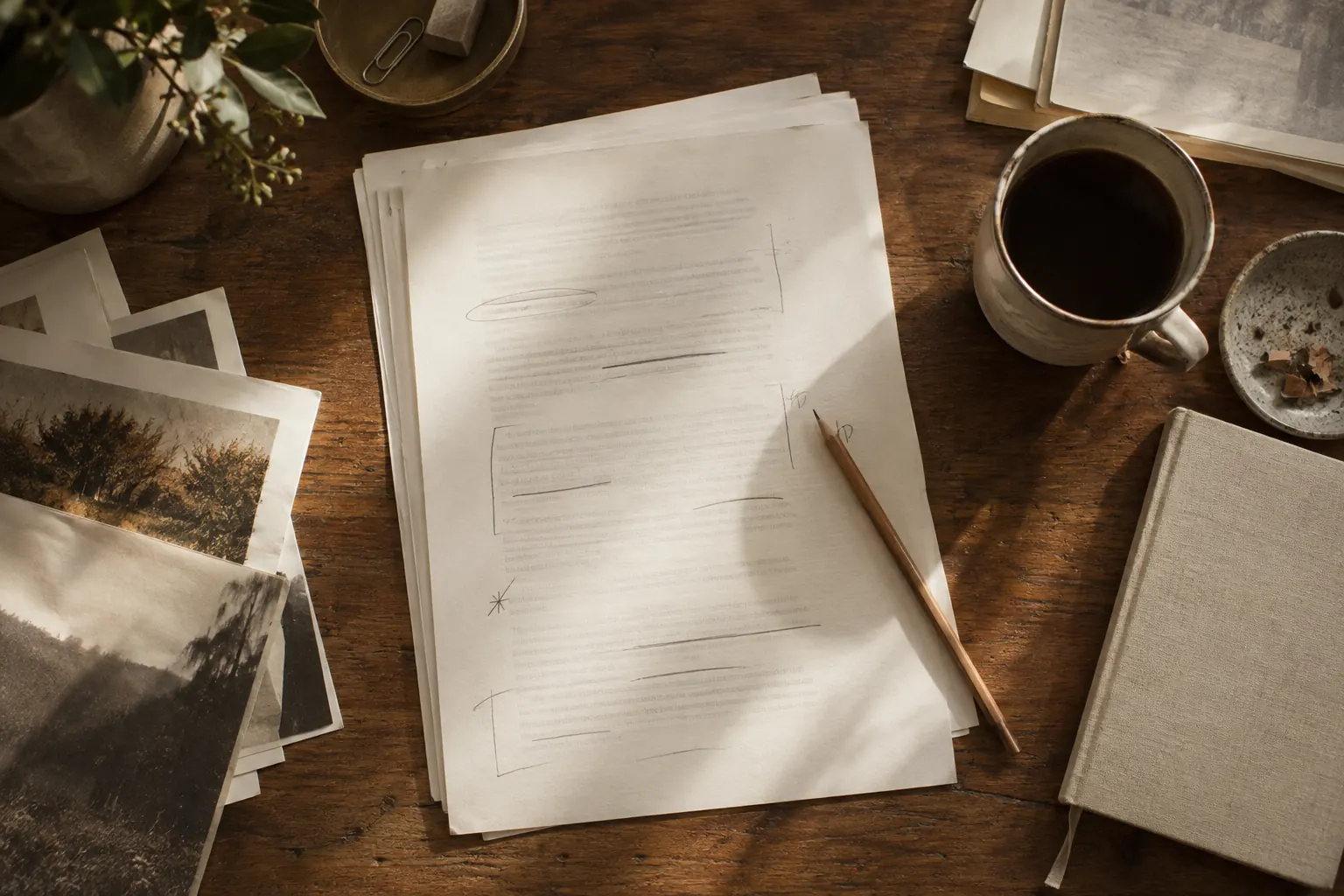
Most of what we do is not writing. It is reading: a draft, the four documents it quietly contradicts, and the meeting notes nobody circulated. The writing comes afterwards, and it usually takes less time than the reading did.
A structural edit moves paragraphs and cuts whole sections. A line edit repairs the sentences that survive. We do both, in that order, and we say which one a piece needs before we quote for it — a manuscript that needs restructuring is not helped by tidier commas.
Everything leaves here with the changes tracked and a short note on the ones you will want to argue with.
The work
What we take on
Four things, and we say no to the rest. Every piece is read at least twice before it leaves.
-
Structural editing
By the draftA full read, a structural pass and a written note on what the piece is actually arguing. Usually the cheapest way to find out that a draft contains two essays.
-
Line editing
By the wordSentence by sentence, with the changes tracked and the reasoning left in the margin so you can overrule us.
-
Writing
By the pieceEssays, reports and the long pieces nobody in-house has time to start. We interview, read the file, and hand back something finished.
-
House style
Fixed feeA written standard your team can follow without asking us again. Delivered as a document, not a workshop.
A manuscript that needs restructuring is not helped by tidier commas.
Index
Everything, in order
Everything we have published, newest first. The last two columns are set in tabular figures, so a column of them can be read straight down the page.
| Title | For | Kind | Year | Words |
|---|---|---|---|---|
| The case for a house style | ForArchitecture practice | KindEssay | Year2026 | Words2,400 |
| An annual review in plain English | ForClimate charity | KindReport | Year2026 | Words8,100 |
| What we mean when we say craft | ForFurniture maker | KindBrand copy | Year2025 | Words1,150 |
| A conversation about scale | ForDesign studio | KindInterview | Year2025 | Words3,700 |
| Notes on writing for a board | ForPension fund | KindEssay | Year2024 | Words5,200 |
| Three hundred pages, read twice | ForUniversity press | KindEditing | Year2024 | Words12,600 |
Word counts are of the finished piece. Scroll sideways for the remaining columns.
By post
Something worth reading, now and then.
A letter every month or so: one piece we have published, one thing we have changed our minds about, and nothing else.
Colophon
How this is made
Three people and a shared reading list. We take on about one piece a fortnight, which is the most we can do and still read everything twice.
- Writing since
- 2014
- Pieces published
- 310
- Work from returning clients
- 68%
- WordsThe studio
- EditedEverything, twice
- Set inFraunces and Inter